My Neighborhood Rent Trends: Reading Rental Market Data Before Renewal Season
Walk into any multifamily pricing meeting and the first question is the same: what are the neighborhood rent trends telling us right now? Too often the answer is a stale citywide figure or a gut feeling. Accurate neighborhood rent trends, grounded in current rental market data and a disciplined rental market analysis, turn that meeting from second-guessing into alignment. When a property management team prices a portfolio of 250 or more units against real estate analytics rather than instinct, decisions happen faster and vacancy risk drops. This guide shows how to read your neighborhood rent trends and local rent trends, what rental market data actually matters, and how a sound rental market analysis converts raw signals into a defensible rent for every unit. The TraceRent's rent recommendations can be used the trusted baseline.
Why Neighborhood Rent Trends Beat a Citywide Number
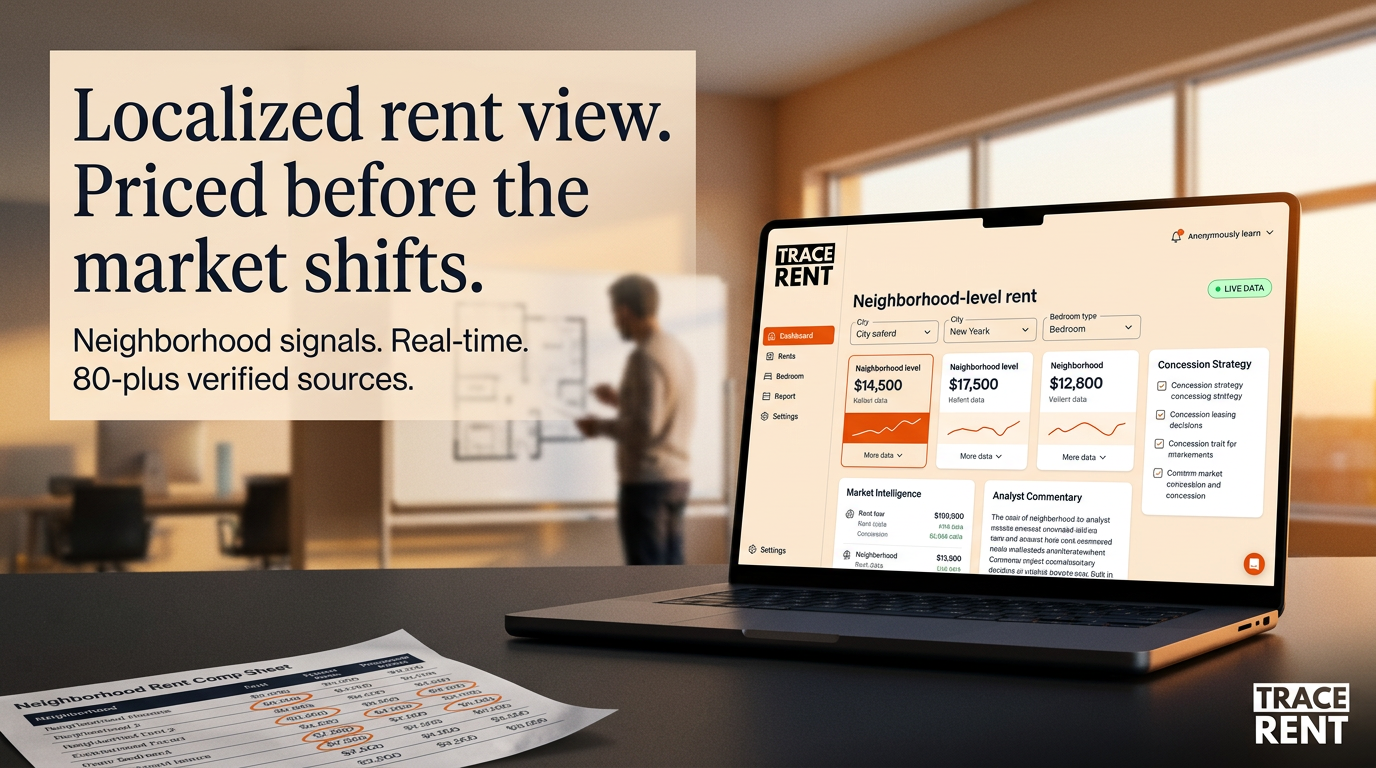
Neighborhood rent trends often turn weeks before a citywide average rent shows it. Reading the local signal early is what protects revenue at renewal.
Local Rent Trends Move Before the City Does
A citywide average rent is a lagging indicator. By the time it shifts, the local rent trends on your block have already moved, and your renewal window may have closed. Watching neighborhood rent trends in real time means you see demand build or soften first, then price accordingly. A timely rental market analysis exposes these local rent trends weeks ahead of any published average rent, which is exactly the edge a multifamily team needs heading into a busy leasing season. Strong rental market data and real estate analytics make those local rent trends visible at the neighborhood level long before the citywide figure catches up.
What Rental Market Data Reveals That Instinct Misses
Instinct says rents always rise in summer. Rental market data says it depends on the block. Good rental market data surfaces the supply coming online three streets away, the concessions a competitor just introduced, and the turnover pattern shaping local rent trends this quarter. Real estate analytics ties these threads together so a pricing meeting works from evidence, not anecdote. The CMHC Rental Market figures confirm why this matters: the national vacancy rate for purpose-built apartments rose to 3.1 percent in 2025, up from 2.2 percent, and that shift landed unevenly across neighborhoods. Rental market data is what tells you which side of that average rent your property sits on.
Neighborhood Rent Trends and the Renewal Calendar
Timing is where neighborhood rent trends pay off most. A disciplined rental market analysis shows whether local rent trends are peaking before your renewal cohort comes due, so you can set rents at the top of the curve instead of chasing it. Miss the turn and you lock in a full year at yesterday's average rent. Real estate analytics aligns the neighborhood rent trends with your renewal calendar so every cohort is priced against the freshest rental market data available, not last season's number. A repeatable rental market analysis turns that timing from luck into process.
Inside the Meeting: From Rental Market Data to Alignment
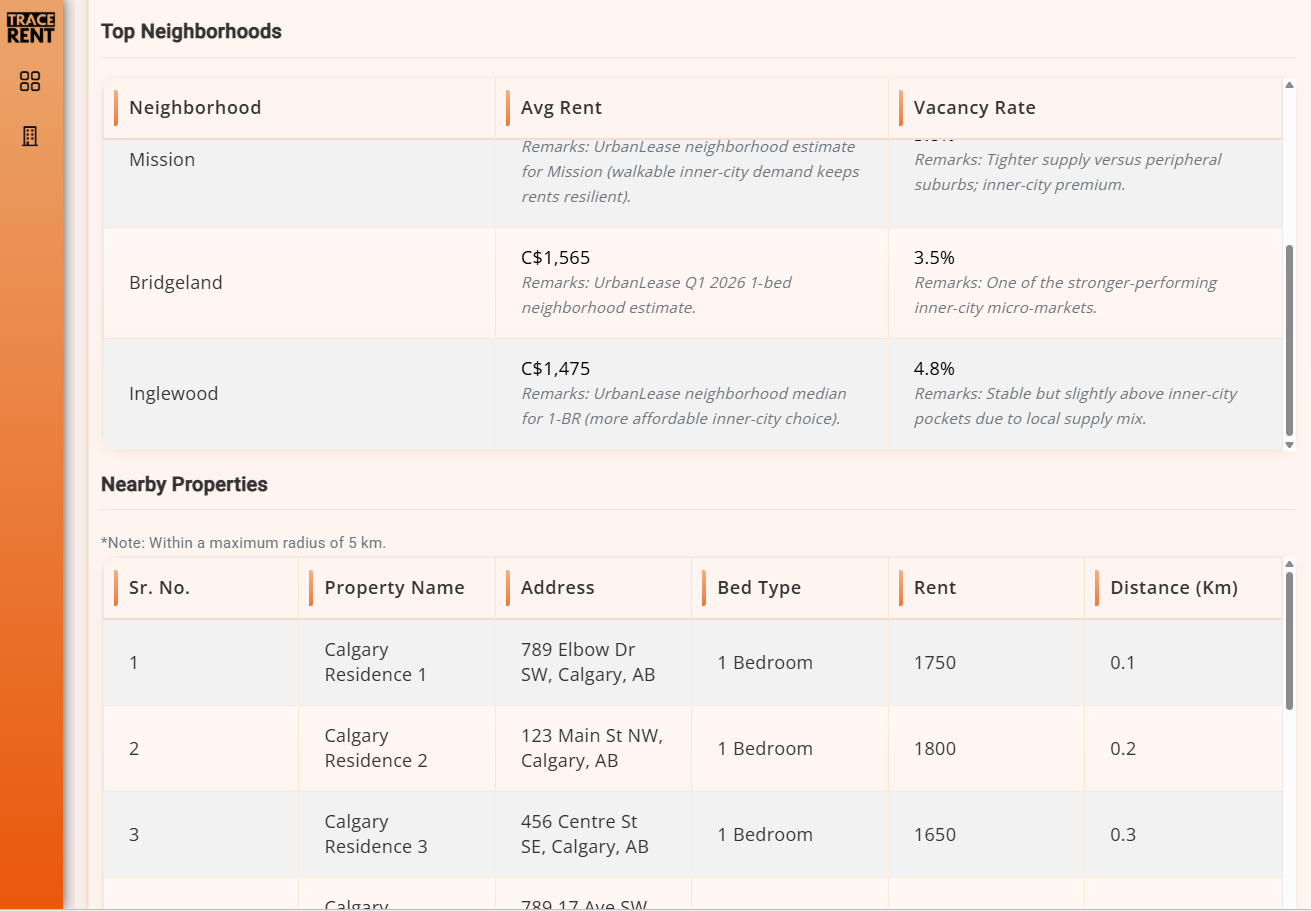
When every stakeholder can see the rental market data behind a recommended rent, the conversation shifts from debate to decision.
Putting Rental Market Data on the Table
In a room where neighborhood rent trends and rental market data are visible to everyone, confidence grows. Instead of arguing over whose gut is right, the team reads the same real estate analytics and aligns on strategy. A defensible recommended rent for each unit, drawn from current rental market data, makes the meeting faster and the outcome stronger. This is how data-driven pricing replaces second-guessing: every number traces back to a shared rental market analysis of neighborhood rent trends and a clear average rent benchmark the whole team can see. A transparent rental market analysis is what makes the room calm.
80+ Sources Behind Every Real Estate Analytics Signal
Reliable real estate analytics is only as good as the rental market data feeding it. TraceRent pulls from more than 80 verified sources to build neighborhood rent trends you can trust, so the average rent you act on reflects the real local market and not a single thin listing. That breadth is what separates genuine real estate analytics from a quick comp lookup. The more sources behind the rental market data, the more precisely the neighborhood rent trends map to your actual blocks, and the more defensible the recommended rent becomes in front of owners and stakeholders.
Pricing Each Unit on Its Own Merits
A blanket average rent ignores that a top-floor corner unit should not carry the same rent as a ground-floor unit facing the courtyard. A proper rental market analysis reads neighborhood rent trends at the unit level, weighing floor, view, square footage, and recent comparable rental market data. The result is a recommended rent tuned to each unit and its local rent trends. The CMHC Rental Market data on rising turnover shows renters now move readily, so a rent even slightly off the local average rent gets punished faster than before. Precise rental market data, run through a careful rental market analysis, is the safeguard.
Turning Neighborhood Rent Trends Into Defensible Rent
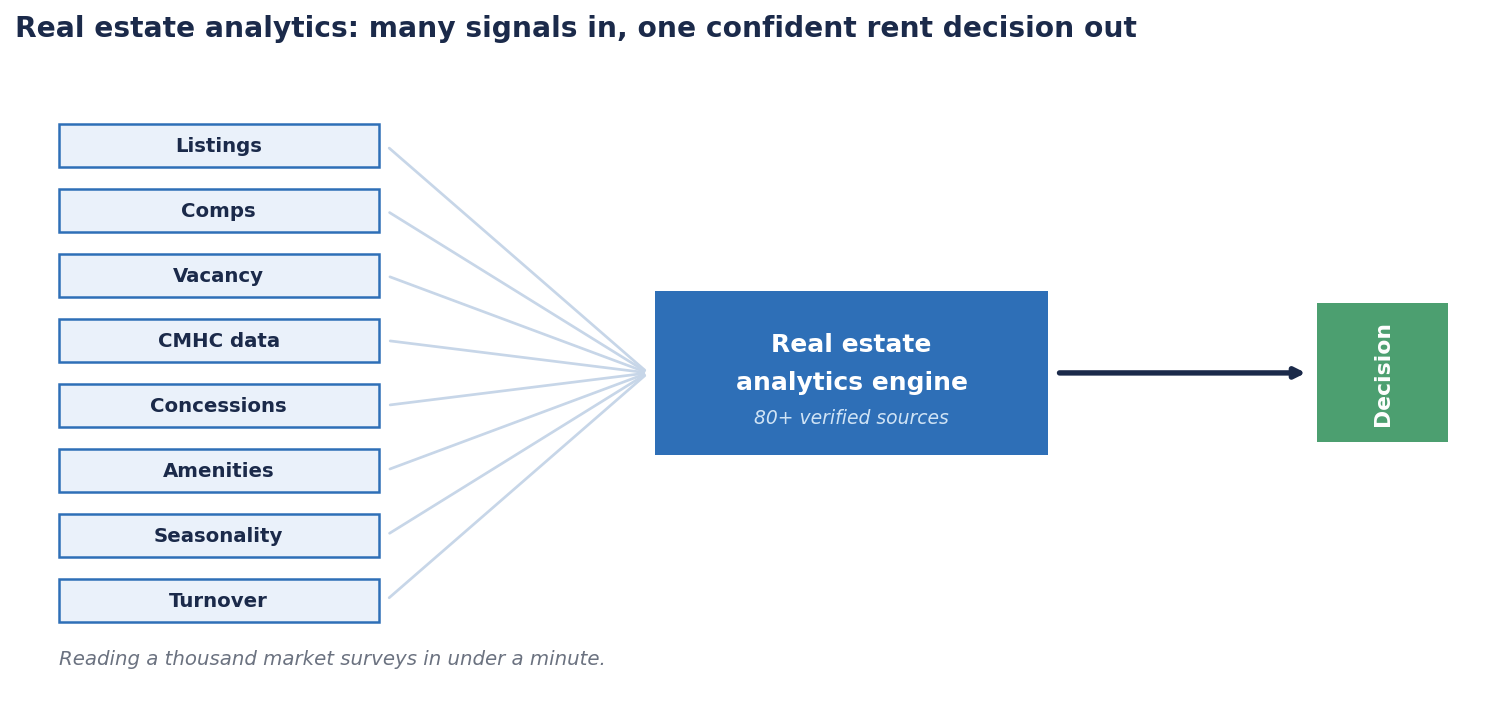
Real estate analytics takes dozens of rental market data signals and converges them into one confident decision, like reading a thousand market surveys in under a minute.
How TraceRent Reads Your Neighborhood Rent Trends
TraceRent reads neighborhood rent trends at the block level, then widens out to rental market data across the city and the country, keeping a property management team continuously updated. You upload your unit data and watch the real estate analytics convert it into a defensible recommended rent, unit by unit, based on each unit's features and its block's movement. Rather than a flat average rent, it delivers a position you can defend. Built for portfolios of 250 or more units, TraceRent turns scattered rental market data and local rent trends into one coherent pricing strategy.
PropAnalyzer for Smaller Portfolios
A smaller operator needs the same neighborhood rent trends and rental market data without enterprise overhead. PropAnalyzer delivers that for portfolios in the 50 to 249 unit range. It pulls the relevant rental market data, computes the local average rent, and benchmarks rent against live neighborhood rent trends so smaller teams price with the same real estate analytics confidence as the largest portfolios. Two focused reports for a low flat fee give a clear, defensible answer to "where are my neighborhood rent trends heading" without a spreadsheet marathon.
Making This Leasing Season Your Strongest
Data-driven pricing is not just smart, it is essential for staying competitive. A multifamily team that reads neighborhood rent trends early, grounds every decision in rental market data and a repeatable rental market analysis, and lets real estate analytics weigh each unit will lease faster and sit emptier less often. The CMHC Rental Market baseline tells you the national average rent; TraceRent tell you where your neighborhood rent trends and local rent trends diverge from it. Acting on that gap, swiftly and with confidence, is how this leasing season becomes your strongest.
Frequently Asked Questions
What are neighborhood rent trends and why do they matter?
Neighborhood rent trends are the direction and pace of rent movement on your specific blocks, as opposed to a citywide average rent. They matter because local rent trends usually shift before the citywide number does, giving a multifamily team time to price renewals at the top of the curve. Reading neighborhood rent trends through TraceRent's rental analytics is far more accurate than relying on a single average rent.
How is rental market data different from a simple rent comp?
A single rent comp is one data point; rental market data is the full picture. Strong rental market data pulls from dozens of sources, including listings, vacancy, concessions, and 1000s of Rental Market figures, then feeds a rental market analysis that surfaces neighborhood rent trends and a reliable average rent. The breadth of the rental market data is what makes the resulting recommended rent defensible, and a structured rental market analysis is what turns it into a decision.
What does TraceRent's real estate analytics actually do for pricing?
TraceRent takes many rental market data signals and converges them into one confident decision per unit. Instead of a blanket average rent, TraceRent's real estate analytics weighs each unit's features against live neighborhood rent trends and local rent trends to recommend a defensible rent. For a multifamily team running a regular rental market analysis, that turns a slow pricing meeting into fast alignment.
How current does rental market data need to be?
Very. Neighborhood rent trends and rental market data can shift weekly as new units come online and concessions appear. The CMHC Rental Market survey captures annual movement, but TraceRent's analytics fills the gap between surveys so the average rent you act on reflects today's local rent trends, not last year's. Continuously updated rental market data is what keeps neighborhood rent trends actionable.