Average Rent - Read a thousand rent reports under a minute
Every pricing decision starts with the same question: what is the right rent near me, on this street, for this exact unit? Typing "average rent around me" into a search bar returns a single citywide figure that flattens dozens of distinct submarkets into one misleading number. The result is rent prices that drift away from what your rental apartments could actually command. This guide shows how to find accurate rent prices around your property, read the housing market block by block, and turn raw numbers into defensible rent. For the broader national picture, the CMHC Rental Market reports remain the trusted baseline.
Why "Rent Near Me" Is the Hardest Number to Get Right
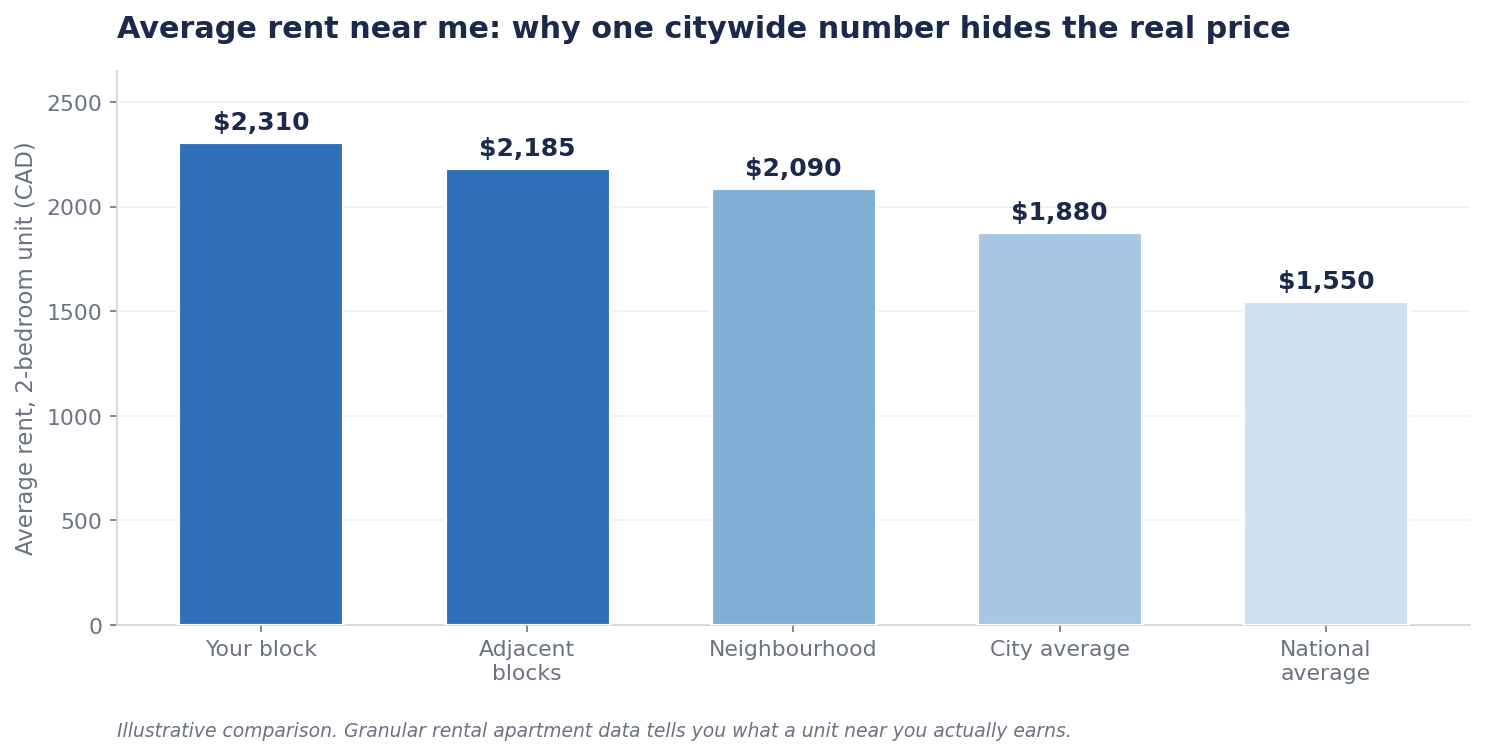
Localized data is the difference between guessing and pricing. A citywide average rent hides the gap between your block and the next one over. The Problem With a Single Average Rent
When you search for the average rent near me, you usually get one figure for an entire city. That number blends luxury towers, older walk-ups, and student rental apartments into a single average rent that matches almost no real unit. Rent prices on one block can sit hundreds of dollars above the rental apartments three streets away. A broad average rent feels reassuring, but pricing a specific unit against it leaves money on the table or pushes rent prices so high the unit sits vacant. Accurate rent near me data has to be granular, not citywide.
Rental Listings Around Me Are a Moving Target
The rental listings around me today are not the rental listings around me next month. New rental apartments come online, concessions appear, and asking rent prices shift weekly. A property owner who priced against the housing market in spring may be reading a stale signal by summer. The CMHC Rental Market data confirms this churn: in 2025 the national vacancy rate for purpose-built rental apartments rose to 3.1 percent, up from 2.2 percent the year before, which changed the average rent landscape in nearly every city. The CMHC Rental Market survey is annual, though, so watching rental listings around me in real time is the only way to keep rent prices anchored to current demand between releases.
Average Rent Around a City's Specific Part
Asking for the average rent around a city's specific part, a single neighbourhood or even a corridor, gets you closer to the truth. The housing market inside one city is really many housing markets stacked together. Downtown rental apartments, transit-adjacent blocks, and suburban submarkets each carry their own average rent and their own trajectory. The CMHC Rental Market survey shows this plainly: within the same metro, some pockets saw rent prices ease while others kept climbing. Finding accurate rent near me means zooming all the way down to the part of the city your property actually sits in.
Reading Rent Prices and the Housing Market Block by Block
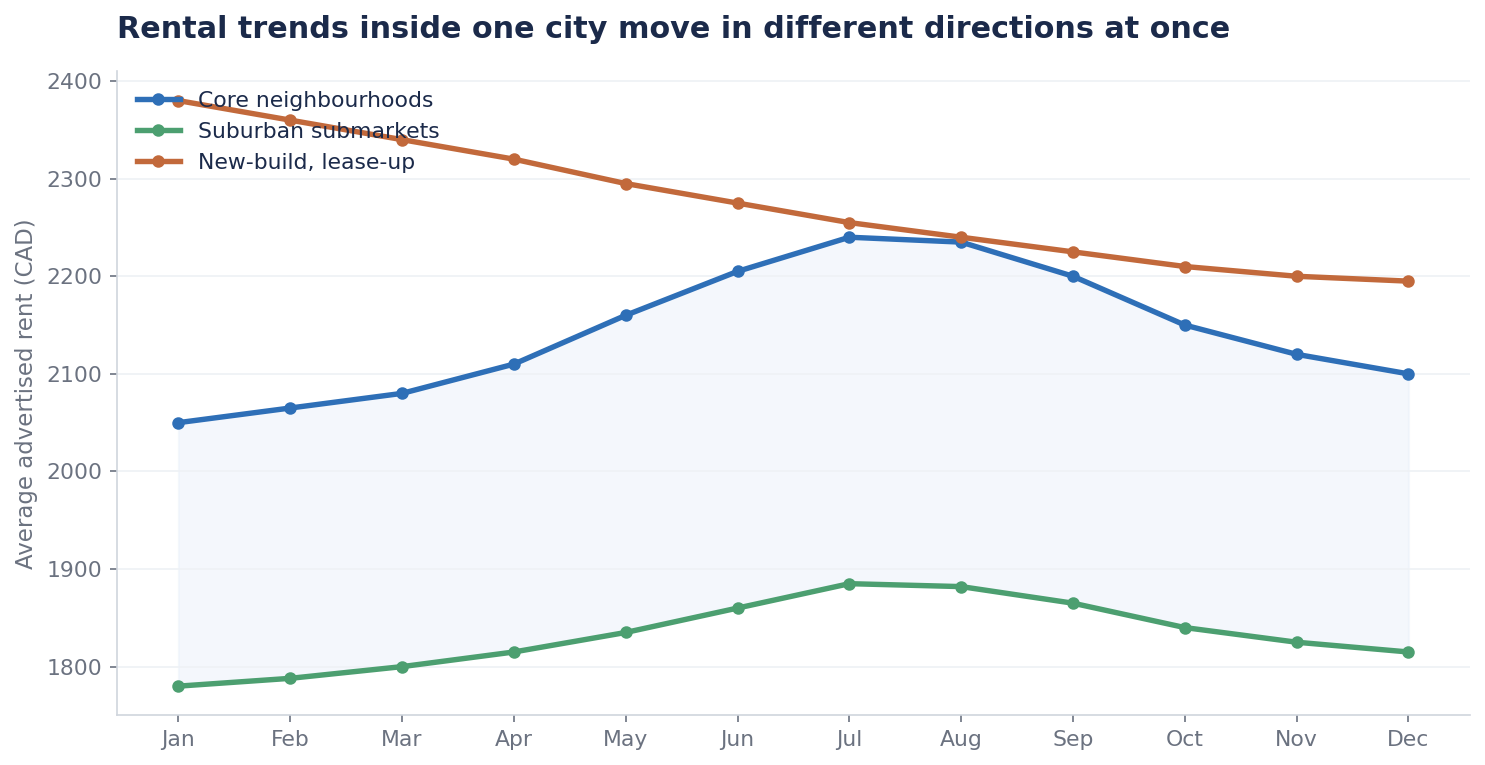
Inside a single city, rent prices in core neighbourhoods, suburbs, and new builds can move in opposite directions at the same time.
Neighbourhood-Level Rental Apartments Data
Neighbourhood-level data on rental apartments gives you the real picture of rent near me. Instead of a citywide average rent, you see how your specific blocks are trending and where comparable rental apartments are pricing today. This granularity lets you set rent prices that attract qualified renters quickly while protecting revenue. When a property owner knows the exact average rent for nearby rental apartments of the same size and vintage, rent prices stop being a guess and become a defensible position rooted in the local housing market.
Tracking Rent Prices Across the Whole City
Block-level detail matters, but so does the wider housing market. Rent prices in your neighbourhood do not move in isolation; they respond to supply, demand, and concessions happening across the city. A surge of new rental apartments in one district can pull the citywide average rent down even while your corner stays tight. Tracking rent prices across the full city, not just the average rent near me, keeps you ahead of shifts before they reach your door. The CMHC Rental Market reports anchor this view, and live data fills the gap between annual surveys so your read on the housing market never goes stale.
Connecting Local Rent to the National Housing Market
Accurate pricing reads three layers at once: the rent near me, the citywide housing market, and the national trend. The CMHC Rental Market survey reported the average rent for a two-bedroom purpose-built unit reached roughly $1,550 in 2025, growing 5.1 percent year over year even as vacancy climbed. That national average rent is a backdrop, not a target. Your rent prices should reflect what rental apartments near you command, calibrated against where the broader housing market is heading. Reading all three layers turns scattered rental listings around me into one coherent signal, with the CMHC Rental Market figures grounding the national layer.
From Rental Listings Around Me to Defensible Rent Prices
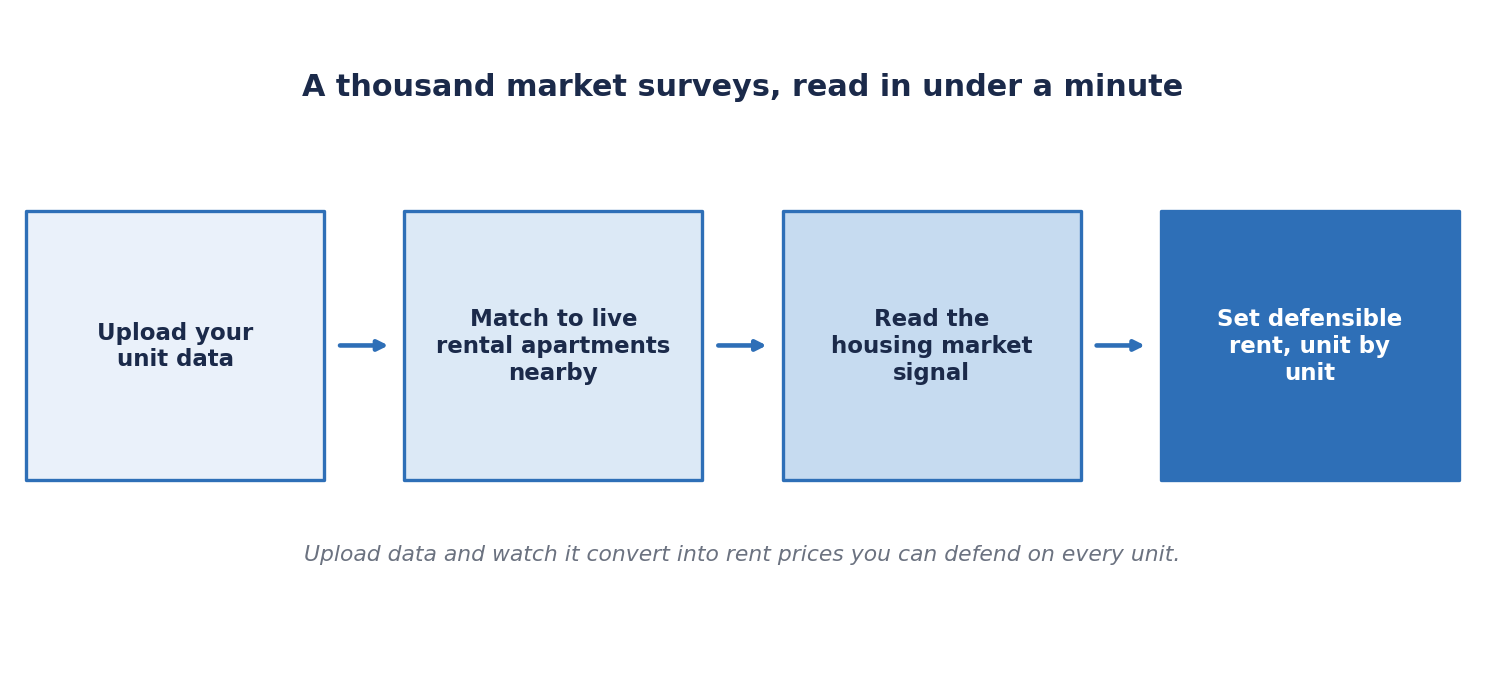
The goal is not just an average rent benchmark. It is an accurate, defensible rent for each individual unit based on its real features and the live housing market.
How TraceRent Turns Data Into Rent Near Me Insight
TraceRent reads the rent near me at the neighbourhood level and then widens out to rental trends across the city and the country, keeping a property owner continuously updated. It is like reading a thousand market surveys in under a minute. Rather than handing you a flat average rent, it weighs each unit's features and its block's movement to recommend accurate, defensible rent prices. You upload your data and watch it convert rental apartments and housing market signals into clear decisions. TraceRent is built for portfolios of 250 or more rental units that need this depth at scale.
PropAnalyzer for Smaller Portfolios
A property owner managing a smaller portfolio needs the same accurate rent near me without enterprise overhead. PropAnalyzer delivers exactly that for portfolios in the 50 to 249 rental apartments range. It pulls the rental listings around me, computes the relevant average rent, and benchmarks rent prices against the live housing market so smaller operators price with the same confidence as the largest ones. Two focused reports for a low flat fee give a housing provider a defensible answer to "what is the right rent near me" without a spreadsheet marathon.
Pricing Each Unit on Its Own Merits
A blanket average rent ignores that a corner unit with a renovated kitchen should not carry the same rent prices as a ground-floor unit facing the alley. Accurate pricing reads rent near me at the unit level, factoring in floor, view, square footage, and recent comparable rental apartments. This is how a property owner protects revenue and reduces vacancy at the same time. The housing market rewards precision, and the CMHC Rental Market data on rising turnover shows renters now move readily, so rent prices that are even slightly off the local average rent get punished faster than before. Reading the CMHC Rental Market trend alongside live block-level data keeps every unit priced to its true position.
Frequently Asked Questions
How do I find the accurate rent near me for my property?
Start with neighbourhood-level data on comparable rental apartments rather than a citywide average rent. Compare the rent prices of nearby units that match your size, age, and features, then check the trend across the wider housing market. Tools like TraceRent and PropAnalyzer compile the rental listings around me and convert them into a defensible rent for each unit.
Why is the average rent around me different from the citywide number?
A citywide average rent blends every submarket into one figure. The rent near me on your specific block can sit well above or below that number depending on local supply, demand, and the quality of nearby rental apartments. Looking at the average rent around a city's specific part gives a far more accurate read on real rent prices.
How often do rent prices in my area change?
Rent prices and the rental listings around me can shift weekly as new rental apartments come online and concessions appear. The CMHC Rental Market survey captures annual movement, but the housing market between surveys moves continuously, which is why live data keeps your average rent benchmarks current.
What is the CMHC Rental Market report and should I rely on it?
The CMHC Rental Market report is Canada's trusted annual snapshot of vacancy and average rent across cities. It is an excellent baseline for the housing market, but it is a point-in-time view. Pair it with live rent near me data so your rent prices reflect today's rental apartments, not last year's average rent.
Can a smaller property owner get the same rent near me insight as large operators?
Yes. PropAnalyzer is built for portfolios of 50 to 249 rental apartments and delivers the same accurate average rent and defensible rent prices that enterprise tools provide. Larger portfolios of 250 or more units use TraceRent for the same rent near me precision at greater scale.